
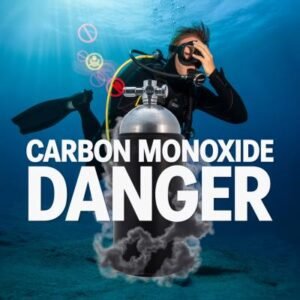
The Hidden Dangers of Carbon Monoxide When Diving
While most divers are well-versed in the risks of nitrogen narcosis and decompression sickness, carbon monoxide poisoning remains one of the most overlooked yet potentially fatal hazards in scuba diving. This colorless, odorless gas can turn a routine dive into a life-threatening emergency in minutes.
How Carbon Monoxide Enters Your Tank
Carbon monoxide contamination typically occurs during the tank filling process. When air compressors intake exhaust fumes from nearby vehicles, generators, or even the compressor’s own engine, CO gets concentrated and pumped directly into your breathing gas. A poorly maintained compressor with overheated oil or a faulty filtration system can also produce carbon monoxide internally.
Even trace amounts of CO that might be harmless on the surface become dangerous underwater. At depth, the increased pressure concentrates the gas, making what seems like a minor contamination potentially lethal.
The Underwater Threat
Carbon monoxide poisoning underwater is particularly insidious because the symptoms—confusion, dizziness, and impaired judgment—can easily be mistaken for nitrogen narcosis or simple fatigue. Unlike on the surface where you might recognize these warning signs, underwater these symptoms often lead to poor decision-making that can result in rapid ascent, equipment problems, or becoming separated from your dive buddy.
The real danger lies in CO’s ability to bind to hemoglobin 200 times more readily than oxygen. As you breathe contaminated air at depth, your blood’s oxygen-carrying capacity diminishes rapidly, leading to hypoxia without the usual warning signs like shortness of breath.
Recognizing the Warning Signs
Early symptoms of CO poisoning during a dive include headache, nausea, dizziness, and unusual fatigue. More severe signs include confusion, loss of coordination, and bright red lips or nail beds. If you or your dive buddy experience these symptoms, especially if they seem disproportionate to the dive conditions, end the dive immediately and ascend safely.
Prevention is Your Best Defense
Always fill your tanks at reputable dive shops that regularly maintain their compressors and test for CO contamination. Many experienced divers carry portable CO detectors to test their air before entering the water. If you’re using a compressor near vehicles or generators, ensure the intake is positioned well away from any exhaust sources.
Pay attention to taste and smell when breathing from your regulator—while CO itself is odorless, contaminated air often has a slight metallic taste or unusual odor from other combustion byproducts.
What to Do If Poisoning Occurs
If you suspect carbon monoxide poisoning during a dive, signal your buddy immediately and begin a controlled ascent following proper safety stops. Once on the surface, get the affected diver on 100% oxygen as quickly as possible and seek immediate medical attention. CO poisoning can have delayed effects, so professional medical evaluation is crucial even if symptoms seem to improve.
The Bottom Line
Carbon monoxide poisoning is entirely preventable with proper precautions. Don’t let this silent killer turn your next dive into a tragedy. Test your air, choose reputable fill stations, and always dive with a buddy who knows the signs. In diving, as in life, the dangers you can’t see are often the most deadly.
